
If you are preparing for panel interviews, the hard part is not only "more people in the room." The hard part is answering one question while several people are quietly testing different risks: can you do the work, can you explain decisions, can you collaborate, can you stay composed, and can you handle follow-up pressure without sounding rehearsed. MockGPT is being built around the same preparation loop: use the resume and job description as context, practice realistic follow-ups, review what happened, and choose a sharper next drill.
That makes the panel format a different kind of practice problem. In a one-on-one interview, you can build a rhythm with one person. In a panel, you need to keep the room with you while still answering the actual question. Looking at everyone is not enough. You need a clear answer line that survives interruptions, stakeholder angles, and the awkward silence after someone writes a note.
Use this guide to prepare for a panel round without turning yourself into a script. The goal is simple: understand the panel, map the signals, answer the person who asked, include the room, and review the round while the details are still fresh.
Panel interviews are interviews where two or more people evaluate one candidate in the same session. Prepare by learning each panelist's likely concern, building resume-backed stories for the role, practicing concise answers, rotating attention naturally, and writing down follow-up gaps afterward.
What are panel interviews?
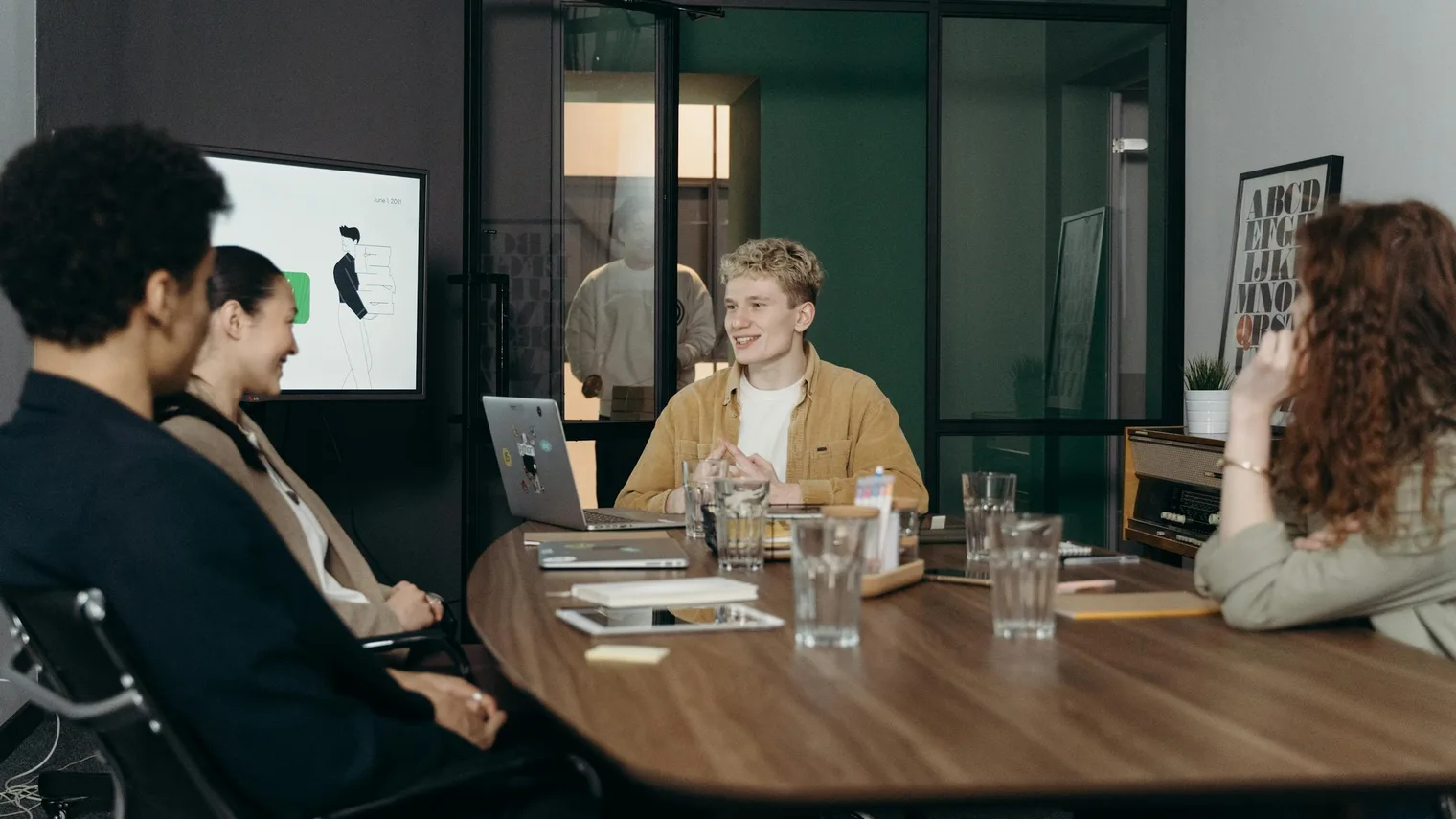
Panel interviews put multiple interviewers in one room or call with one candidate. The panel may include a hiring manager, recruiter, future teammate, cross-functional partner, senior leader, or subject-matter expert. Each person may ask a different type of question because each person cares about a different part of the role.
The University of Connecticut's panel and group interview guidance explains that a panel usually includes more than one interviewer, often representing different areas of the organization. That definition sounds simple, but the candidate experience is more complex: you are not just answering more people; you are answering several evaluation lenses at once.
A panel is usually used when the company wants to save time, compare feedback in one shared session, or test how you communicate with multiple stakeholders. It can happen in government hiring, healthcare, education, nonprofits, cross-functional business roles, senior roles, and final-stage interview loops.
The questions may look familiar. You may still get "tell me about yourself," "why this role," "describe a conflict," "walk me through a project," or "what would you do in this situation?" What changes is the delivery. Your answer has to be easy for a mixed room to follow.
Why panel interviews feel harder than one-on-one interviews
Panel rounds feel harder because your attention has more places to go. One interviewer may nod while another looks skeptical. One panelist may ask about details while another cares about teamwork. A senior leader may stay quiet until the end, then ask the question that decides whether your story sounds mature enough.
This can push candidates into two bad habits. The first habit is performing for the whole room. The answer becomes broad, polished, and vague because the candidate is trying to impress everyone at once. The second habit is locking onto the friendliest person. The answer becomes warmer, but the rest of the panel may feel ignored.
The better move is to treat the room as one conversation with rotating speakers. Start by answering the person who asked the question. Then widen your eye contact to include the group as you give the example. When you finish, return to the person who asked. That pattern feels natural without becoming a performance.
Panel interviews also expose weak structure quickly. If your answer takes three minutes to reach the point, several people will start interpreting the delay differently. One person may think you lack detail. Another may think you are avoiding the question. Another may think you are nervous. Structure protects you.
Panel pressure map
Each panelist listens for a different risk| Panelist | Likely concern | Your answer needs |
|---|---|---|
| Recruiter | Fit, motivation, logistics, salary, communication | A concise story and clear reason for the role. |
| Hiring manager | Can you do the work and explain tradeoffs? | Role-relevant evidence, ownership, and results. |
| Future teammate | Will collaboration with you feel practical? | Specific examples of communication, handoffs, and conflict. |
| Cross-functional partner | Can you work beyond your own lane? | Stakeholder examples and decision clarity. |
| Senior leader | Do you show judgment and maturity? | Business context, prioritization, and calm self-awareness. |
Prepare the room before you prepare answers
For panel interviews, start by learning who will be in the room. If the invite lists names, look up each person's role, team, and likely relationship to the job. Do not overdo it or get creepy. You only need enough context to predict what each panelist may care about.
If names are not listed, ask the recruiter a simple question: "Would you be able to share who will be joining the panel or which teams they represent?" This is normal. It helps you prepare relevant examples and questions.
Then build a role map. Put the job description in the middle. Around it, list the panelist types you expect: hiring manager, team member, recruiter, leader, partner team, customer-facing stakeholder. Next to each one, write the signal they probably want to verify.
For example, a product manager panel might include engineering, design, data, and a group PM. Engineering may care about technical tradeoffs. Design may care about research and product taste. Data may care about metrics. The group PM may care about prioritization and leadership. One story can touch all four, but not if you tell it as a generic success story.

Build a small story bank for panel interviews
You do not need twenty stories. You need five stories that can flex. A useful panel story usually proves more than one signal: ownership, judgment, communication, conflict, ambiguity, and result.
Use this structure:
- Story title: a short label you can remember quickly.
- Panel signals: which stakeholders this story can satisfy.
- Role match: the job-description requirement it supports.
- Evidence: metric, decision, customer detail, timeline, or tradeoff.
- Follow-up risk: the detail a panelist may challenge.
- Short version: the 60-second version you can deliver under pressure.
The short version matters. In panel interviews, several people may have questions queued up. A long answer can block the conversation and make you seem less aware of the room. Aim for a direct answer, one example, one result, and a stop.
Here is the difference:
"There were many stakeholders, and I tried to communicate with everyone."
"Engineering and customer success disagreed on timing, so I split the rollout into two stages and used support ticket themes to decide which accounts moved first."
The stronger version gives the panel something to ask about. That is good. A panel that asks follow-ups is not always a bad sign. It often means your story has enough substance to inspect.
How to answer multiple people without losing the thread
A panel answer should have a spine. The spine is the one sentence you could repeat if someone interrupted you halfway through. Before you start, decide what the answer is really proving.
Use this pattern:
- Answer first.
Give the direct answer in one sentence before the example.
- Name the context.
Explain the role, constraint, or business situation quickly.
- Show your action.
Make your ownership clear, especially if the story involved a team.
- Give the result.
Use a metric, decision, learning, or before-and-after change.
- Invite depth.
Stop cleanly so a panelist can ask for the detail they care about.
Eye contact should support the answer, not become its own project. Begin with the panelist who asked. As you explain the example, include the rest of the room naturally. When you give the result, return to the original questioner. This keeps the answer anchored.
If two panelists ask similar questions, do not repeat the same story with new words. Say, "I would connect that to the same project, but from a different angle." Then answer the new angle. That shows listening and prevents the panel from hearing you recycle material.
If a panelist interrupts, pause and answer the interruption. Do not fight to finish your prepared story. A panel interview rewards responsiveness. You can say, "Yes, the tradeoff was the hardest part. The short version is..." and then adjust.
Questions to ask in a panel interview
Questions matter more in a panel round because they show whether you understand the group, not just the job title. Do not ask every person the same generic question. Use the panel to learn how the role works across teams.
Good questions include:
- "From your perspective, what would make someone successful in this role after six months?"
- "Where does this role need to build trust across teams quickly?"
- "What handoffs or decisions usually create the most friction?"
- "How does this group evaluate tradeoffs when priorities compete?"
- "What would you want the new hire to understand before joining?"
These questions work because they let different panelists answer from their own seat. They also help you understand the real job. If every panelist names a different pain point, that is useful information. If everyone points to the same priority, that tells you what to emphasize in your follow-up and next round.
Texas Tech University's career center also notes in its interviewing guidance that panel rounds commonly put one applicant in front of multiple interviewers and require attention to the whole table. The practical lesson for candidates is to treat the panel as a source of signals, not an audience you must impress with a monologue.
Common panel interview mistakes
The most common panel interview mistake is over-answering. A candidate feels watched, so they add more detail to prove they are qualified. The room gets less clear, not more clear.
The second mistake is trying to remember everyone's name so hard that the answer becomes stiff. Names help, but clarity matters more. If you forget a name, do not panic. Answer the question directly and keep the conversation moving.
The third mistake is treating quiet panelists as uninterested. A quiet panelist may be taking notes, comparing your answer to a rubric, or waiting for their section. Include them with natural eye contact, but do not force a private connection.
The fourth mistake is assuming a panel is only a stress test. Sometimes the format is just scheduling efficiency. Sometimes it reflects a collaborative role. Sometimes the company wants several perspectives in one decision. Your job is not to decode the whole hiring process during the call. Your job is to answer clearly and collect enough signal to prepare the next step.
In a panel, you are not giving several separate interviews at once. You are giving one answer that different people can evaluate from their own angle.
How to practice for panel interviews
The best panel interview practice is not reading a list of likely questions. It is practicing how the same answer changes when a recruiter, hiring manager, teammate, or senior leader asks a follow-up.
Take one resume story and pressure-test it from four angles:
Follow-up drill
Use one story, then change the panelist angle| Panelist angle | Follow-up question | What it tests |
|---|---|---|
| Recruiter | Why was this project relevant to the role you want now? | Motivation and role fit. |
| Hiring manager | What did you personally own? | Accountability and scope. |
| Teammate | How did you handle disagreement? | Collaboration and tone. |
| Senior leader | What would you do differently now? | Judgment and learning. |
Record one practice pass if you can. Then review the transcript, not just your memory of how it felt. Mark where the answer became too long, where the ownership sounded blurry, where you dodged a tradeoff, and where you forgot to return to the question.
That is also how to prepare for a panel interview without memorizing. You are not rehearsing a perfect speech. You are making sure your examples can handle several reasonable lines of inquiry.

What to do after a panel interview
Right after the panel, write down three things before they blur together:
- Who asked which question?
- Which answer felt strongest?
- Which follow-up exposed weak detail?
- Which role priority came up more than once?
- What should you practice before the next round?
If you send thank-you notes, personalize them lightly. You do not need a separate essay for every panelist. Mention one useful point from the conversation, reinforce your interest, and connect your experience to the priority they raised.
The real value of post-panel notes is not only politeness. It is preparation data. If one panelist pushed on stakeholder conflict and another pushed on metrics, your next practice round should include both. If nobody asked about a project you expected, do not force it into the next conversation unless it answers the role's actual concern.
Final check before your panel interview
Panel rounds reward candidates who can stay specific while managing a room. You do not need to charm everyone separately. You need to make your answers easy to follow, grounded in the role, and strong enough for different stakeholders to inspect.
Before the interview, ask:
- Do I know who is likely in the room and what each person may care about?
- Can I explain my five strongest stories in 60 seconds each?
- Can each story handle two follow-up questions?
- Do I have questions that invite different panelists to reveal useful signal?
- Do I have a plan for reviewing the panel afterward?
If those answers are clear, stop adding more material. Practice one answer out loud, then practice one interruption. MockGPT can fit into that last step by helping candidates think in terms of resume context, role signals, realistic follow-up pressure, transcript review, and a next practice plan instead of trying to perform for the room.
FAQ: panel interviews
What are panel interviews?
Panel interviews are job interviews where two or more interviewers meet with one candidate in the same session. Each panelist may evaluate a different signal, such as role fit, technical depth, collaboration, communication, or leadership judgment.
How do you answer in a panel interview?
Answer the person who asked first, then include the room as you explain the example. Keep the answer structured: direct answer, context, your action, result, and a clean stop so panelists can ask follow-ups.
How do you prepare for a panel interview?
Learn who will be on the panel, map each person's likely concern, prepare five flexible resume-backed stories, practice concise answers, and pressure-test each story with follow-up questions from different stakeholder angles.
How can MockGPT help with panel interview practice?
MockGPT can help candidates prepare for panel interviews by thinking through resume and job-description context, realistic follow-up pressure, transcript review, feedback, and a clearer next practice plan.